



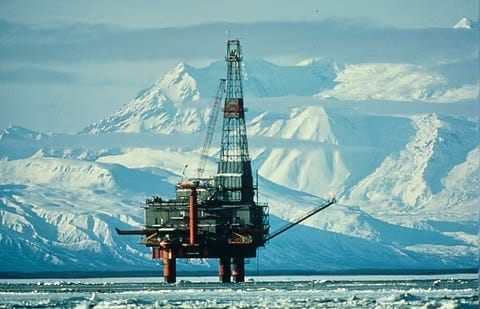
In the relentless march of the “One Big Beautiful Bill,” Section 50105 stands out like an oil slick in a wildlife preserve. Behind all the political pageantry, it quietly rewrites the future of one of the last untouched ecosystems in America: Alaska’s National Petroleum Reserve (NPR–A).
Let’s break down what this section does—and why it matters more than the headlines want you to notice.
Back to the (Oil) Future
The NPR–A is a massive, federally owned stretch of tundra on Alaska’s North Slope. It's home to migratory birds, caribou, polar bears—and, yes, underground fossil fuels. Although drilling in Alaska dates back to the 1950s, this specific area had not previously been drilled.
In 2022, the Biden administration placed new limits on oil development in the region to protect fragile habitats and combat climate change. But under this new bill, those protections get wiped clean. The government is now forced to revive a Trump-era drilling blueprint that began during his first presidency—a plan crafted for maximum fossil fuel access and minimal environmental oversight.
It’s the legislative equivalent of unzipping a wildlife preserve and inviting Big Oil to move in.
Five Giant Lease Sales, Guaranteed
This isn’t a vague suggestion or a regulatory nudge. The bill mandates it:
At least 5 massive oil lease sales must be held over the next decade.
Each one must offer no less than 4 million acres—roughly the size of Connecticut.
The timeline?
The first lease sale must happen within one year of the bill’s passage.
Additional sales must follow every two years until the fifth is complete.
Once these sales are made, the federal government can’t easily walk them back. These leases are legally binding—and their environmental costs, irreversible.
Same Old Rules, Same Old Damage
Worse still, the bill mandates that all new leases must follow the terms of the 2020 Trump plan—not the more protective framework developed under Biden.
That means:
Looser environmental reviews
Faster permitting
Fewer constraints on roadbuilding, pipeline-laying, and extraction infrastructure
Weaker protections for threatened species and ecosystems
In short: drill first, ask questions never.
Who Gets Paid (and Why That Matters)
One of the most strategic shifts hidden in this section is where the money goes.
Under current law, the federal government collects most of the revenue from oil leases—bonuses, royalties, rentals, and so on. But starting in fiscal year 2034, that changes:
70% of all oil money will now go to the State of Alaska
Only 30% stays with the U.S. Treasury
Why is that significant? Because it creates a powerful incentive for state lawmakers and local power players to push for even more drilling. More oil = more revenue = more political momentum for extraction.
This isn’t just about energy. It’s about economics, leverage, and building a local political machine that can outlast any federal administration.

Environmental Rollback Disguised as “Energy Policy”
This section is part of a larger strategy: cloak environmental deregulation in the language of “energy independence” and “economic opportunity.” But here’s what it really does:
Reverses environmental protections in one of the world’s most climate-sensitive regions
Undermines U.S. climate goals and the global push to reduce fossil fuel dependence
Commits public lands to oil production for decades, regardless of future scientific or policy shifts
Makes it harder for future administrations to reverse course, thanks to locked-in leases and long-term contracts
What This Means for You (and for the Planet)
This isn’t just about Alaska. It’s about how public land is used, who profits, and what values guide our energy future. In an era when scientists are sounding the alarm about the climate crisis, the One Big Beautiful Bill barrels in with a “drill, baby, drill” mandate on some of the most delicate land we have left.
It’s a bet that short-term profit matters more than long-term survival.
And unless voters, watchdogs, and lawmakers push back, it’s a sure bet the oil companies are all too eager to cash in.
Next up in this series: We’ll dive into Section 60002 and the death of the Greenhouse Gas Reduction Fund. Spoiler: It’s not just about cuts—it’s about killing the very tools designed to fight the climate crisis.
Want to hear more? Make sure to watch The Pragmotiv Podcast as we unpack these moves with a cross-generational panel of truth-tellers.