



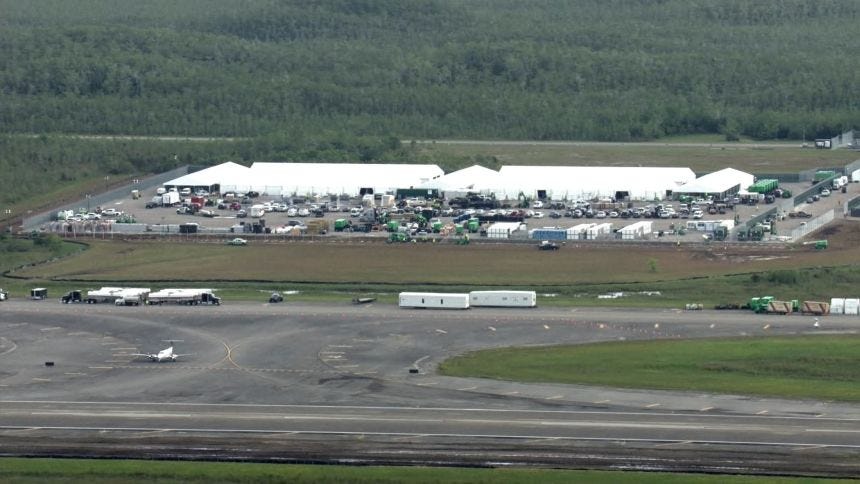
In a chilling blend of dystopian policy and environmental negligence, the state of Florida—under Governor Ron DeSantis’ leadership—is rapidly constructing a makeshift prison camp deep in the Florida Everglades. The facility, dubbed “Alligator Alcatraz” (yes, really), is being constructed to detain deportees and undocumented immigrants in tents and trailers amidst one of the most volatile ecosystems in the continental U.S.
Let’s unpack the horror.
The Location: A Swamp Turned Holding Pen
The Everglades—home to endangered species, rare wetlands, and protected tribal land—is now being used to detain thousands of vulnerable people in an environment teeming with alligators, invasive pythons, mosquitoes the size of small drones, and zero escape from hurricane season.
Florida Attorney General, James Uthmeier proposed the idea earlier this year and got a lot of push-back from environmentalists. Environmental protection advocate, Friends of The Everglades as well as members of the Miccosukee Tribe asked DeSantis to scrap the plan. They assert the construction would “inflict significant damage to the ecosystem.”
The site, reportedly secured through quiet backdoor land deals orchestrated by Governor DeSantis and rubber-stamped by a compliant Florida legislature, sits on what was once designated as ecologically protected land. Florida environmentalists and residents successfully halted the development of a major airport on the site back in 1970. A federal report found that the proposed jetport would “inexorably destroy the South Florida ecosystem and thus the Everglades National Park. The reason there is only one runway on the site is because a smaller portion of the site was developed into the Dade-Collier Training and Transition Airport and primarily used for aviation training.
But the transformation from conservation zone to prison zone has taken mere weeks. The 11,000- foot runway has been adapted to house a tent city expected to house up to 5,000 individuals and will be used to further the Trump administration’s efforts to increase detention capacity and accelerate deportations.
Crass Branding, Cruel Conditions
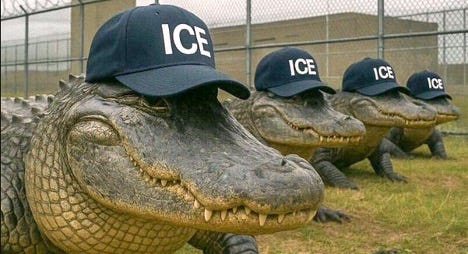
The above AI-generated meme photo appears on the DHS social media sites.
If the ethics weren’t already in the toilet, consider this: the state—or one of its contracted vendors—is now selling “Alligator Alcatraz” merchandise.

Think about that. Hats. T-shirts. Mugs.
All to commemorate a prison camp for deportees being placed in a region prone to category 4 and 5 hurricanes, rising floodwaters, and record-breaking heat indexes.
While ICE claims the tents and trailers are “temporary,” environmental experts and human rights advocates warn this is an ecological and humanitarian disaster in the making.
“Where will the waste of 5,000 people go?”
—Actual question from a local town hall, met with silence from state officials.
The Everglades already has poor drainage, vulnerable water tables, and delicate species. The introduction of human sewage, medical waste, and construction debris only magnifies the concern.
DeSantis’ Role & Trump’s Endorsement
Governor DeSantis has defended the site as “a necessary step in Florida’s border enforcement leadership”—even though Florida doesn’t have a border with Mexico. He’s called it “efficient,” “patriotic,” and “innovative.”
Meanwhile, President Trump has announced plans to visit the site in the coming weeks—part of his campaign tour under the banner of “Fortress America.”
A visit from Trump, who continues to fan the flames of immigrant scapegoating, will likely cement the facility as a political talking point and not a solution to any actual crisis.
Let’s be clear: this is not about immigration enforcement. This is about optics, power, and cruelty-as-theater.
Floridians Are Pushing Back
While the DeSantis administration has tried to keep public opposition to a minimum, Floridians are speaking out:
Environmentalists are suing to halt the development.
Tribal leaders are condemning the violation of sacred land.
Residents are flooding hearings with questions state officials refuse to answer.
The most common?
“What happens when the storm comes?”
“How do we evacuate a swamp prison with no roads?”
“Where is the infrastructure for water, waste, or medical care?”
State leaders have dodged, dismissed, or outright ignored those questions. The silence is louder than the protests.

What This Really Is
“Alligator Alcatraz” isn’t about public safety. It’s about manufacturing spectacle, punishing the powerless, and turning human suffering into merchandisable content.
The prison camp is a physical manifestation of how quickly a society can slide from “concerned about border security” to “profiting off prisons in snake-infested wetlands.”
This isn’t just bad policy—it’s inhumane, irresponsible, and deeply un-American.
And it’s happening right now.
What You Can Do:
Contact your local representatives in Florida and demand oversight.
Support environmental and immigrant rights organizations leading the legal fight.
Call out the normalization of cruelty when you see it—especially when it’s branded like an amusement park!
“Alligator Alcatraz” isn’t just a swamp prison—it’s a warning.
If we’re not careful, the line between satire and state policy will disappear entirely.
.